Workshop home / Development projects
In development · Local playtest environmentVirtual playfield
A way to try new adventures using the actual game’s rules, with a photo of the physical table as the starting point.
This is a project overview. The simulator runs locally on the development PC; it is not a playable online table on this website.
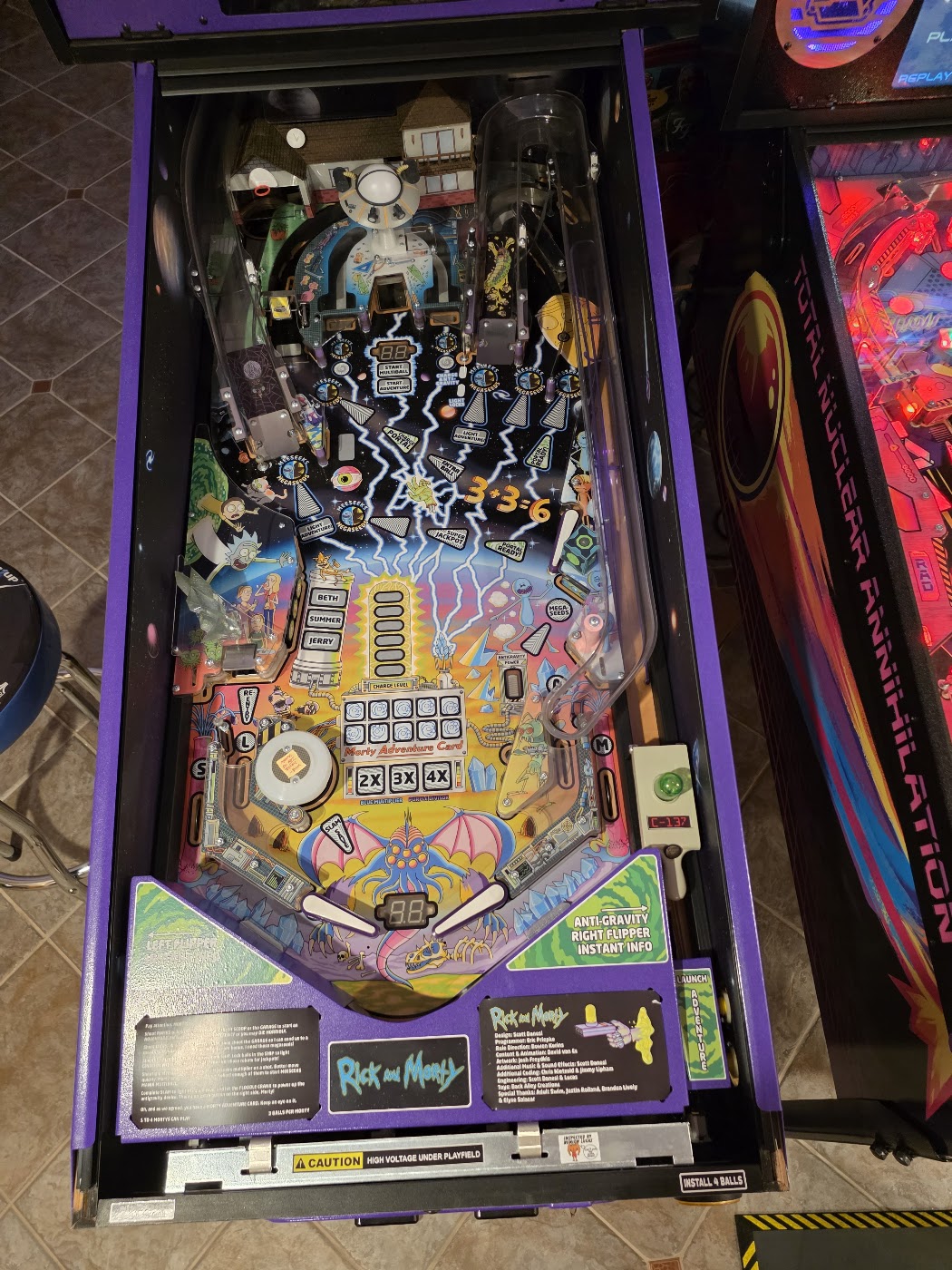
Real rules, a simulated ball.
The local playtest connects an approximate 2D ball-and-flipper model to the owner’s game installation through an emulated controller. The game supplies rules, scoring, modes, display, lamps, and audio. The virtual playfield supplies simulated switch events.
- Photo-based positions for shots, lights, switches and outputs.
- Flippers, ramps, captures, target resets, nudges and ball returns.
- A separate visual sandbox for experimenting with lamp patterns and component mapping.
A development baseline, not a finished recreation.
The previous development PC completed an uninterrupted three-ball playtest, including adventure entry, music changes, ball saves, bonus, and game end. Its recorded final score was 844,201, with all five balls returned.
On transfer to the current workspace, package checksums, 33 Python tests, and the physics regression checks passed. Those are local validation results; the full integration playtest has not been repeated on the current PC.
How it feels to play.
- Calibrate shot geometry, flipper response, and ball movement.
- Verify ship, diverter, and magnet behavior.
- Complete multiball testing from start to finish.
- Use the environment to prototype new rules such as Nomortland.
Ramps currently use guided paths, and elevated geometry is not a full 3D collision model. Reloading the browser reconstructs approximate ball positions.